

Anuradhapura Sacred City
Meet Anuradhapura as a living centre of Buddhist worship, then discover the monumental archaeology and ancient water systems around it
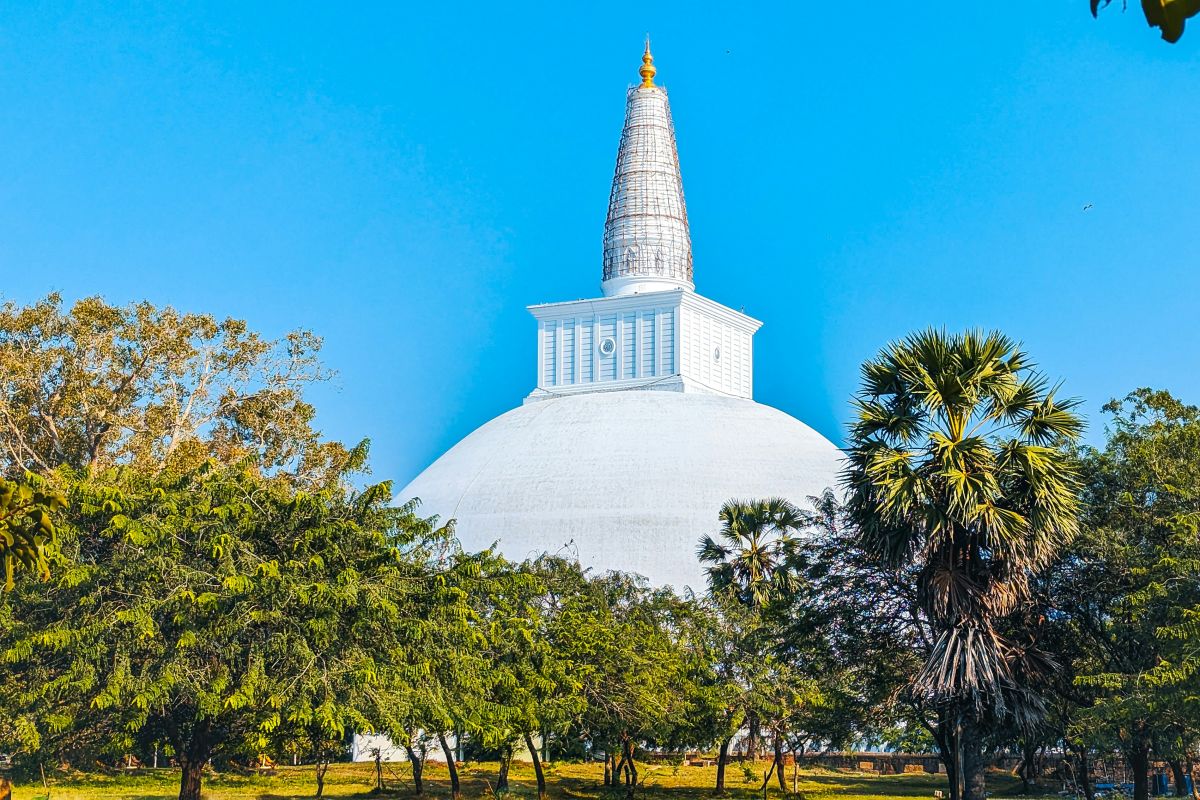
Anuradhapura is first a living sacred city. Pilgrims gather beneath Sri Maha Bodhi, bring flower offerings and worship around immense stupas, so the defining experience is active devotion rather than a ruins-only site. Sri Lanka's first great capital grew from the 4th century BCE and flourished for more than 1,300 years. Today worship, royal history and a World Heritage landscape remain closely intertwined.
The archaeology and water-management story forms the second layer. Ruwanwelisaya, Jetavanaramaya and Abhayagiriya reveal monumental ambition; monasteries, carved moonstones, bathing ponds, reservoirs and channels show how the city organised religious life, urban space and water on a remarkable scale. The landscape is dispersed, so a focused half day should combine a living worship area, a great stupa and one archaeological cluster. A full day gives space for quieter ruins, water features and a proper midday break.
Plan around heat and worship rhythms. Start early, use the hottest part of the day for lunch or shadier ruins, and return later for cooler barefoot sections and late-afternoon devotion. Dress modestly, remove footwear and hats where required, and move respectfully around worshippers and ceremonies. Carry water and sun protection, and use a bicycle, tuk-tuk, car or driver-guide between distant zones rather than trying to cross the whole Sacred City on foot. CCF heritage admission currently runs from 07:00 to 17:00, while individual worship areas may follow their own rhythms.