
Hurst Castle
Explore Henry VIII's remote Solent fortress, arriving by wildlife-rich ferry or a bracing two-mile walk along Hurst Spit
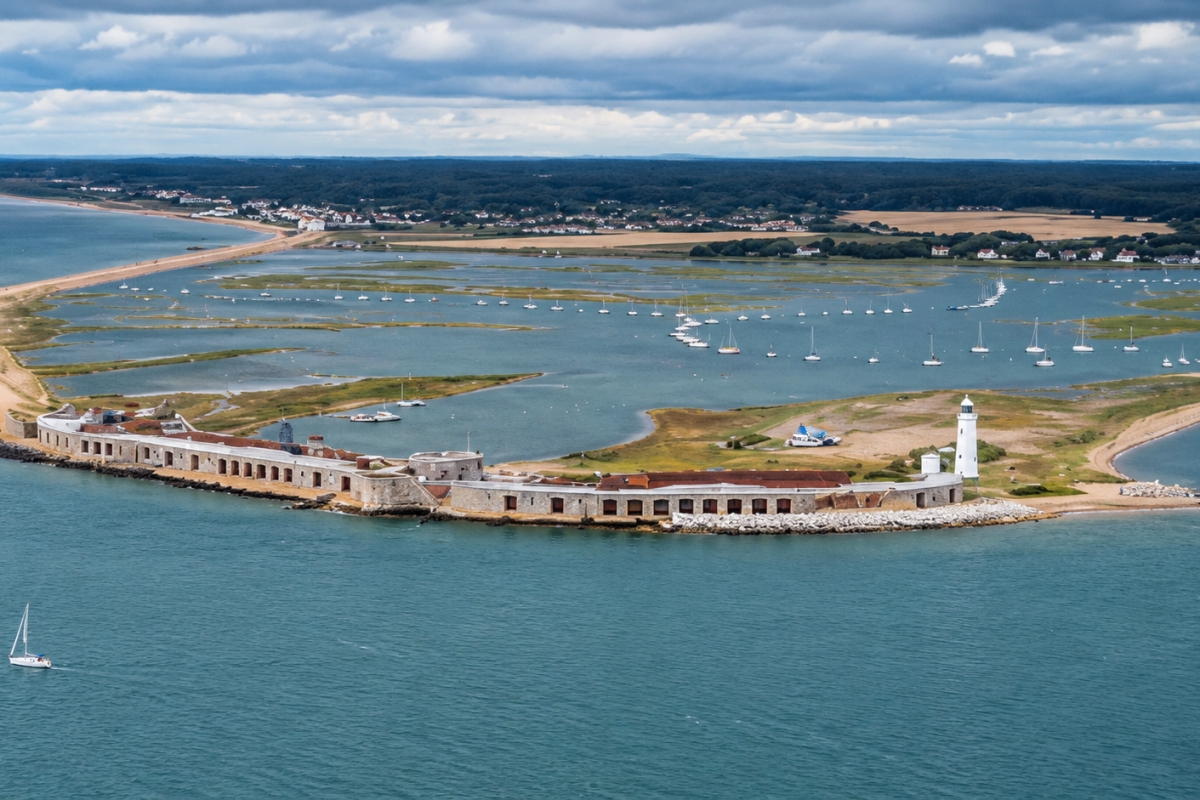
Hurst Castle sits at the seaward end of a long shingle spit, with the Solent on one side and Keyhaven's saltmarshes on the other. Reaching it is part of the experience: most visitors take the roughly 20-minute ferry from Keyhaven, while stronger walkers can follow the exposed two-mile spit from Keyhaven or Milford on Sea. The journey gives the castle a sense of remoteness that is unusual for an English Heritage site.
Inside, the compact Tudor keep opens into a much larger fortress shaped by more than four centuries of coastal defence. Henry VIII's artillery fort, the room linked with Charles I's imprisonment, later gun batteries and the long east and west wings show how the site adapted from the 1500s through both world wars. Sea views, the active Hurst lighthouse and the Isle of Wight make the setting as important as the military fabric.
This is an active, weather-exposed visit rather than an easy indoor castle tour. Ground-floor routes cross gravel, grass, old rails and uneven paving; upper levels use stairs and there are no lifts. The shingle walk is demanding, and ferry operation varies with weather, tides and passenger numbers. Allow time for both the journey and the castle rather than treating admission as the whole outing.
The castle closes through winter and is currently shut until 25 March 2027. During the open season, ferries normally begin at 10am and run about every 20–30 minutes. Visitors should shape the day around the last return sailing, changing tide conditions and enough daylight for any planned walk.